
English| EUR
Suggested for you
More currencies
Choose a language
Biscayne Bay offers some of the most accessible shallow-water coral reefs on the Atlantic coast, making it an ideal training ground for first-time snorkelers. The park's protected waters, clear visibility, and proximity to Miami eliminate many of the barriers that keep novices from trying the sport. This guide walks you through what to expect, how to prepare, and which sites match your skill level.
Quick answer
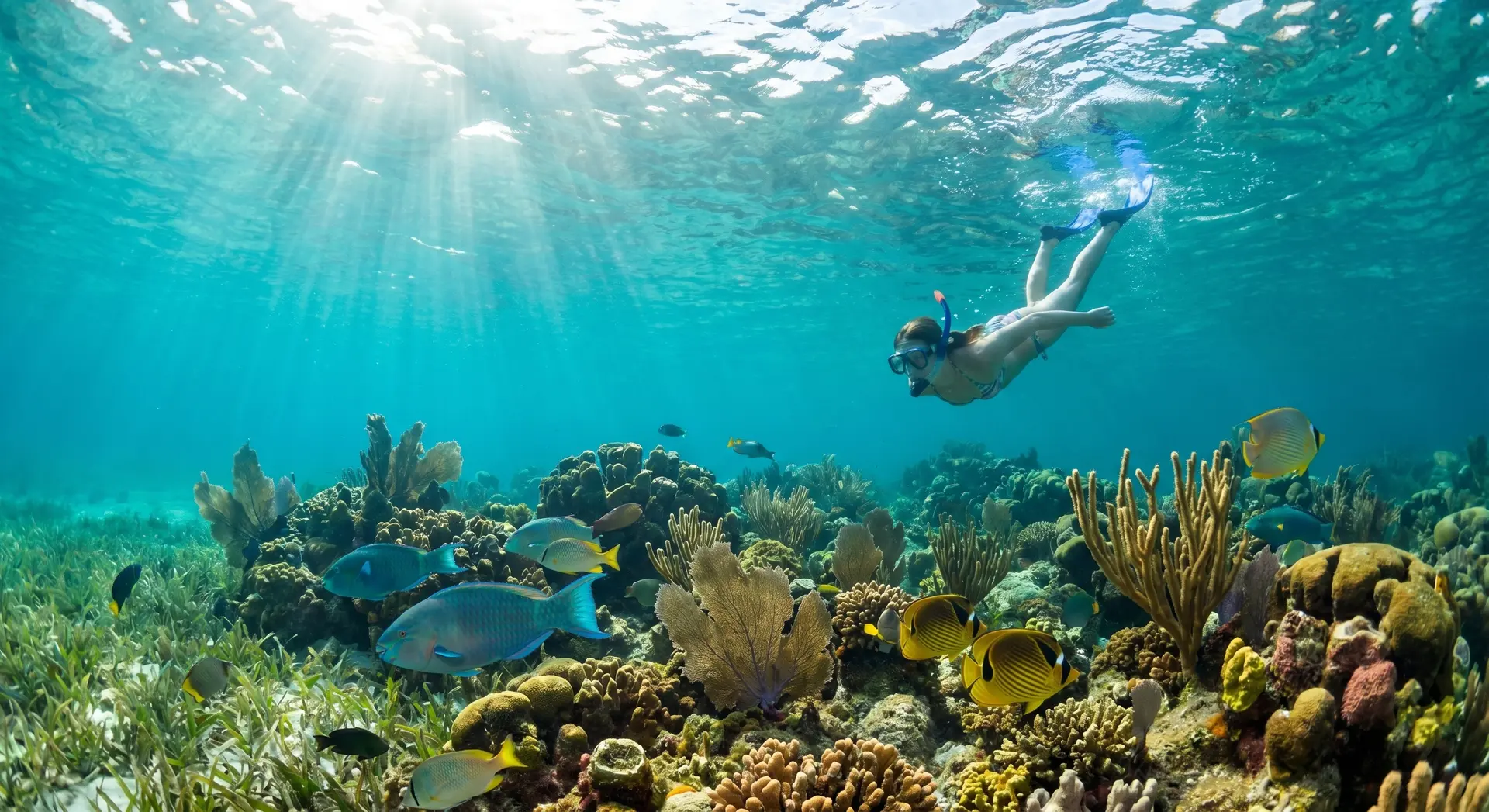
Snorkeling in Miami for beginners centers on Biscayne Bay's shallow reef sites, where depths range from six to twelve feet and calm conditions prevail most of the year. The Maritime Heritage Trail and Elkhorn Coral Reef offer beginner-friendly environments with minimal current, high visibility, and abundant marine life including parrotfish, sergeant majors, and sea fans. Most first-timers join guided boat tours that provide gear, instruction, and access to protected reef zones within Biscayne National Park.
Biscayne Bay holds the northernmost living coral reef system in the continental United States, and nearly ninety-five percent of the park lies underwater. The reef structure here developed over thousands of years atop ancient limestone, creating a shallow platform that sits close enough to the surface for snorkelers to observe without the depth anxiety that open-ocean sites provoke. First-time snorkelers often worry about gear comfort, breath control, and water confidence. Biscayne Bay addresses each concern through geography. The bay's western shoreline remains shallow for miles, allowing gradual acclimatization before reaching reef zones. Water temperature holds steady between seventy-two and eighty-four degrees year-round, eliminating the need for thick wetsuits that restrict movement and complicate buoyancy for beginners. Visibility typically exceeds thirty feet during calm weather, giving novices ample warning of their surroundings and reducing the claustrophobia some experience in murkier water. The park's concession-operated boat tours depart from the Dante Fascell Visitor Center and transport snorkelers directly to marked reef sites. Guides provide mask-fitting instruction, finning technique demonstrations, and in-water supervision. The Maritime Heritage Trail combines snorkeling with maritime archaeology, allowing beginners to explore six shipwreck sites in shallow water where the structures provide visual reference points and reduce the disorientation that open water can cause. Elkhorn Coral Reef, located roughly eight miles offshore, features staghorn and brain coral formations that attract queen angelfish, yellowtail snapper, and occasional sea turtles. Beginner snorkeling in Miami requires no prior certification, but comfort in water and basic swimming ability remain non-negotiable. Most operators recommend arriving early in the day when wind remains light and surface chop minimal. The reef ecosystem here is federally protected, meaning all marine life and coral must remain untouched. First-time snorkelers should practice neutral buoyancy techniques on land or in a pool before entering the bay to avoid accidental contact with fragile coral structures that take decades to grow.
“The bay's western shoreline remains shallow for miles, allowing gradual acclimatization before reaching reef zones.”
This sequence takes you from boat departure to your first snorkel in Biscayne Bay's shallow reefs. The process spans roughly 90 minutes including the boat ride and gear fitting.
The park itself has no shore snorkeling access; you'll need to book a guided boat tour through an authorized concessioner. Boats depart from the Dante Fascell Visitor Center, and most trips last three to four hours.
The crew will fit you with a mask, snorkel, and fins before you reach the reef. Test the mask seal on deck by inhaling through your nose—it should stay in place without the strap.
Use the boat's swim ladder and enter feet-first, keeping your mask on your face and the snorkel mouthpiece secure. Many first-timers forget to breathe through the mouthpiece and surface immediately; practice a few breaths at the ladder before swimming away.
Keep your face submerged and breathe only through the snorkel tube, letting your body relax into a horizontal float. If water enters the tube, surface and blow sharply to clear it—don't remove the mouthpiece.
The crew will mark a boundary with buoys or verbal instructions; shallow reefs here sit in three to ten feet of water. Avoid touching coral or standing on the bottom, as both damage the reef and can injure you.
Crew will call swimmers back after 30 to 45 minutes in the water. Swim to the ladder, remove your fins, and hand them up before climbing aboard.
For novice snorkelers, the morning hours offer the calmest water conditions and highest underwater visibility in Biscayne Bay. Arriving early minimizes the impact of afternoon winds and daily boat traffic, providing a more stable environment for those building their comfort levels.
—
Lower boat traffic creates safer, calmer conditions for beginners practicing new skills.
75°F to 85°F
Waters are warm with lower wind speeds before the summer storm season begins.
85°F to 90°F
Expect hot conditions and potential afternoon thunderstorms; prioritize early morning sessions to avoid weather shifts.
75°F to 82°F
Cooler air and water temperatures coincide with clear conditions as hurricane season wanes.
Verdict: The best time for a beginner is weekday mornings during April or October when water conditions remain calm and crowd levels are lowest.
Biscayne Bay's calm, shallow waters are ideal for first-time snorkelers, but the right preparation makes the difference between a tentative wade and a confident exploration.
Access to Biscayne National Park is free for all visitors. Costs for snorkeling activities only apply when securing passage on authorized boat tours or utilizing camping facilities.
Verdict: A typical visitor pays 0 USD for park entry, with final costs dependent entirely on the specific boat tour operator selected for snorkeling.
Biscayne National Park remains open daily to provide consistent access for beginner snorkelers planning their visit. The park operates on a standard schedule throughout the week to help visitors coordinate their arrival.
Biscayne National Park is located at 9700 SW 328th Street, Sir Lancelot Jones Way, Homestead, FL 33033. The most reliable way to reach the Dante Fascell Visitor Center is by private vehicle via the Florida Turnpike.
Florida Turnpike south to exit 6, follow signs for SW 328th Street
Direct route to 9700 SW 328th Street
Arrive within the 07:00–17:30 window, ideally as early as possible, to ensure calm water conditions and to confirm your access to scheduled boat departures.
Everything you need to know about snorkeling in miami for beginners
Biscayne Bay provides a protected marine environment that is ideal for snorkeling in miami for beginners due to its shallow, clear waters and abundant sea life. The calm conditions within the bay allow those new to the activity to practice in a controlled setting.
When preparing for your excursion, bring a mask, snorkel, fins, and reef-safe sunscreen to protect the marine habitat. Having your own gear can make snorkeling in miami for beginners more comfortable, though some boat tours provide equipment rentals.
While you can visit the park, accessing the best reefs for snorkeling in miami for beginners typically requires a boat tour provided by authorized concessionaires. These tours offer guidance and transport to the most vibrant underwater sites.
There are generally no specific age restrictions for entering the park, but tour operators may have their own safety requirements for snorkeling in miami for beginners. It is recommended to check with your specific boat tour provider before booking.
Entrance to the park is 0 USD, meaning there is no cost to access the grounds. Please note that separate fees apply if you choose to participate in boat tours or camping.
The best arrival window is 07:00–17:30 to ensure the calmest water conditions for your visit. Arriving early helps you avoid choppy afternoon seas often found in coastal marine areas.
While the park provides access to the bay, you should verify equipment availability with your boat tour operator beforehand. Most excursions include the necessary gear for participants to explore the underwater flora and fauna safely.